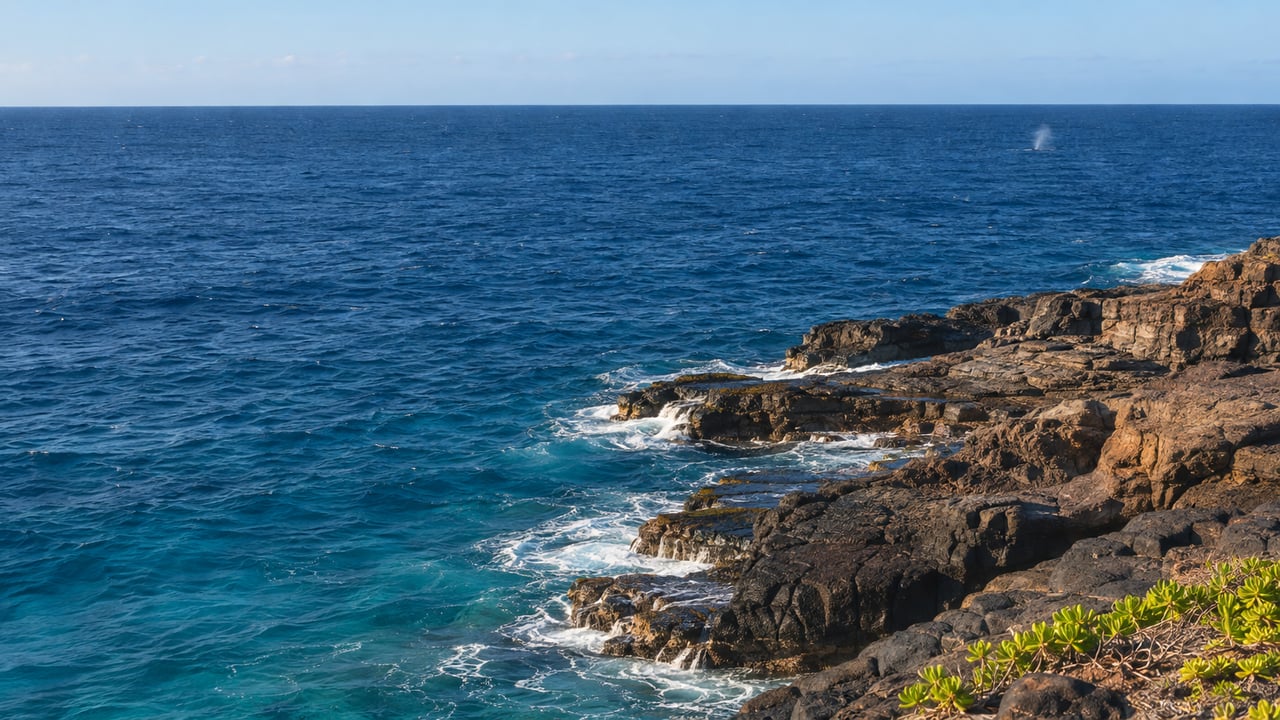
DLNR calls the Makapuʻu Point Lighthouse Trail an in-season whale lookout. The Sanctuary Ocean Count, the shore survey held on three Saturday mornings each winter, last recorded Makapuʻu Lighthouse on its results sheets in 2020. Since then, the count for this end of the island has come from Lānaʻi Lookout and Hālona Blowhole, two pullouts on the Ka Iwi coast in Hawaii Kai. In January 2026, the counters at Lānaʻi Lookout averaged 8.11 humpbacks per 15-minute scan. No other Oahu shore site reached that average that month.
Humpback season in Hawaii generally runs from November into May, and NOAA puts peak abundance between January and March. This Thursday falls at the start of that window. For anyone who lives in Hawaii Kai or Portlock, the closest watching spots are also among the best documented on the island.
How this stretch of coast compares
The long-term numbers come from sanctuaryoceancount.org, an independent site that is not affiliated with NOAA. It took the site tables from the program's results sheets for 59 counts, 2007 through 2026, and averaged the whales seen at each lookout. The figure for each site is the average number of whales, adults plus calves, counted per 15-minute period. It does not count individual animals.
From 2022 to 2026, Lānaʻi Lookout averaged 5.25 whales per period and Hālona Blowhole averaged 5.11. Over those five seasons, the only Oahu site with a higher average was Shark's Cove on the North Shore, at 5.36. Mōkapu Point came in at 5.17, Pyramid Rock at 4.98 and Turtle Bay Resort at 4.97.
Both Hawaii Kai lookouts have also improved over time. From 2007 to 2011, Lānaʻi Lookout averaged 4.41 and Hālona 3.94. The 2022 to 2026 averages are the highest of any five-year span for both sites. Across the island at Lanikai, a site counted over the same years, the 2022 to 2026 average was 1.42.
January is when the gap opens up
The 2026 results by month show how strongly the season peaks on this coast. Here are the averages per 15-minute period at the three count sites in Hawaii Kai and Portlock:
| Site | January 2026 | February 2026 | March 2026 |
|---|---|---|---|
| Lānaʻi Lookout | 8.11 | 6.11 | 2.56 |
| Hālona Blowhole | 5.22 | 3.86 | 1.11 |
| Spitting Caves | 4 | 2.22 | 0.11 |
In January 2026, the next-highest Oahu sites after Lānaʻi Lookout were Hālona at 5.22, Lāʻie Point at 4.33 and Kualoa Ranch at 3.89. By March, every site on this stretch had fallen sharply. Statewide totals show the same pattern. NOAA's recap of the 2026 counts reports 1,954 whale observations in January, 1,935 in February and 436 in March, and cautions that the totals may include the same whale counted more than once.
Oahu's share of those observations was 337 on the January 31, 2026 count, as Hawaii News Now reported. The same story said the statewide January figure was 158 lower than in the same period of 2025. On the February 28 count, Oahu recorded 288, according to the program's community announcement.
According to a March 2026 NOAA article, the estimated humpback population that winters in Hawaii fell from about 33,000 in 2012 to 26,000 in 2021, and the article says the population had not returned to the levels seen before the marine heatwave. The shore counts measure something different from that estimate. They record what counters see from land on three mornings a year.
Spitting Caves, the Portlock site
The southernmost of the three count sites on this coast is Spitting Caves, at the Portlock end. From 2022 to 2026 it averaged 3.46 whales per period, up from 3.16 in 2007 to 2011. Its January 2026 average of 4 put it ahead of most windward and North Shore sites that month. By March it had dropped to 0.11.
Hawaii Kai once had more count sites. Hanauma Bay last appears on a results sheet in 2016, and Makapuʻu Lighthouse and Diamond Head in 2020 and 2021. The official program says some designated sites may not be offered in a given year, depending on site leaders and access permissions. When Makapuʻu was still counted, its average was 4.07 for 2017 to 2021. The point is still a good place to watch even without counters there.
Makapuʻu this month
The Hawaii Department of Land and Natural Resources lists the Makapuʻu Point Lighthouse Trail as a two-mile round trip. On October 21, DLNR closed the Makapuʻu Lookout, the viewing area just north of the trail, for repairs. The upper viewing area was fully closed on weekdays, holidays excepted, from 6 a.m. to 2:30 p.m. The main Lighthouse Trail and its parking stayed open throughout. DLNR's park notices page lists the repair window as October 21 through November 7, 2026. That page has the latest status of the lookout before a morning walk.
Winter hours apply across the Kaiwi State Scenic Shoreline. Since the day after Labor Day, the park has been open from 7 a.m. to 6:45 p.m., and summer hours of 7 a.m. to 7:45 p.m. return on April 1. DLNR lists no drinking water or restrooms at Kaiwi. Anyone planning a long morning at a lookout should bring water from home.
The 2027 count mornings
The next Sanctuary Ocean Count is on January 30, February 27 and March 27, 2027. NOAA's Ocean Count page gives the count hours as 8 a.m. to 12:15 p.m. The registration page lists sign-ups opening at noon HST on January 4, February 1 and March 1, and each one closes two weeks later. Site leaders send participants the meeting time and place before each count. In 2026, Lānaʻi Lookout, Hālona Blowhole and Spitting Caves were all among the ten Oahu sites that reported.
The 2026 numbers favor the January date. On the January 2026 count, all three local sites recorded their highest averages of the season.
The land behind the lookouts
The ridgeline behind these pullouts is protected. In 2017, DLNR announced that the last two privately held parcels on the mauka side of the Ka Iwi coast, 182 acres in total, had been conveyed to Livable Hawaiʻi Kai Hui. The deed carries restrictions and a conservation easement that protect the land from development. The Hui has run volunteer mornings on that land, including planting and other ʻāina restoration as part of the Kaiwi Coalition's work. Its event page has a past example. On the makai side, DLNR's restoration work in the state park includes planting native species, controlling invasive species, putting up symbolic fencing and marking set routes to keep foot traffic off the plants.
An ocean view toward the Ka Iwi coast is part of what Hawaii Kai and Portlock homeowners value, and it is part of what a buyer pays for. If you are weighing what your view adds to a sale, or looking for a home with this stretch of water in its windows, Tracy Allen can talk it through with you before whale season peaks. Book an Appointment.